
Contigo es Mejor – Insights from Physical Activity Researchers Around the World
By Lauren Schuck
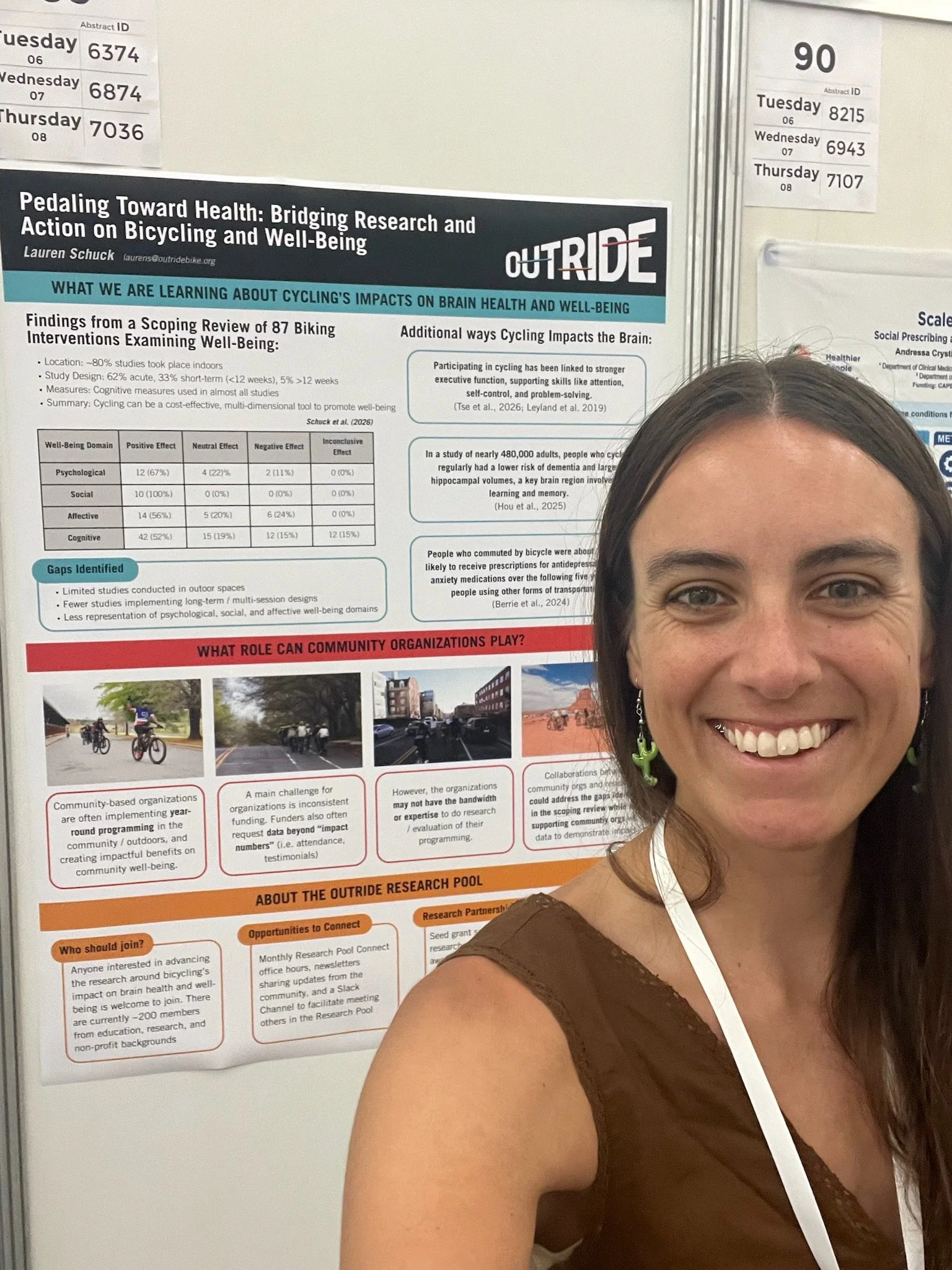
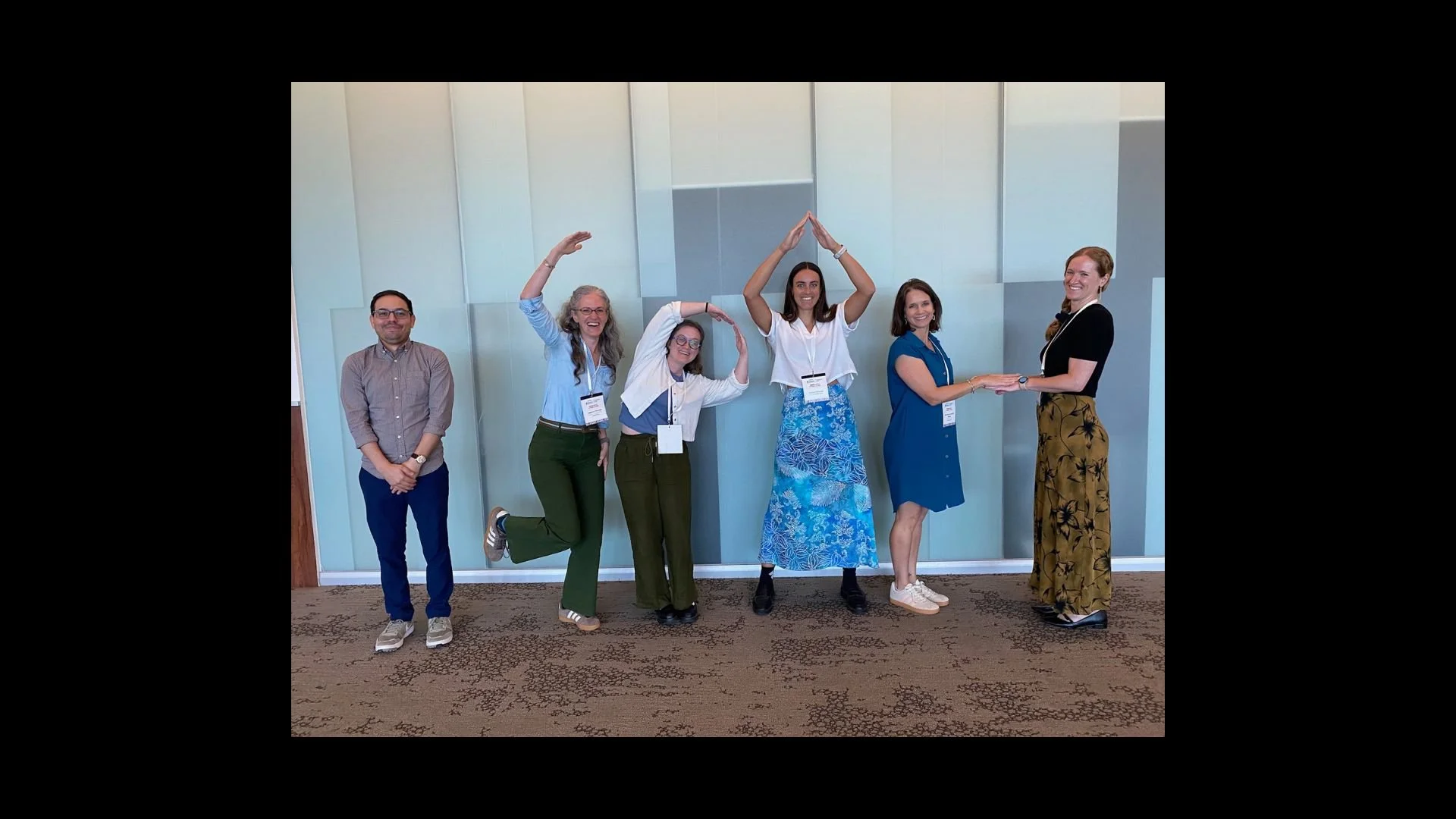
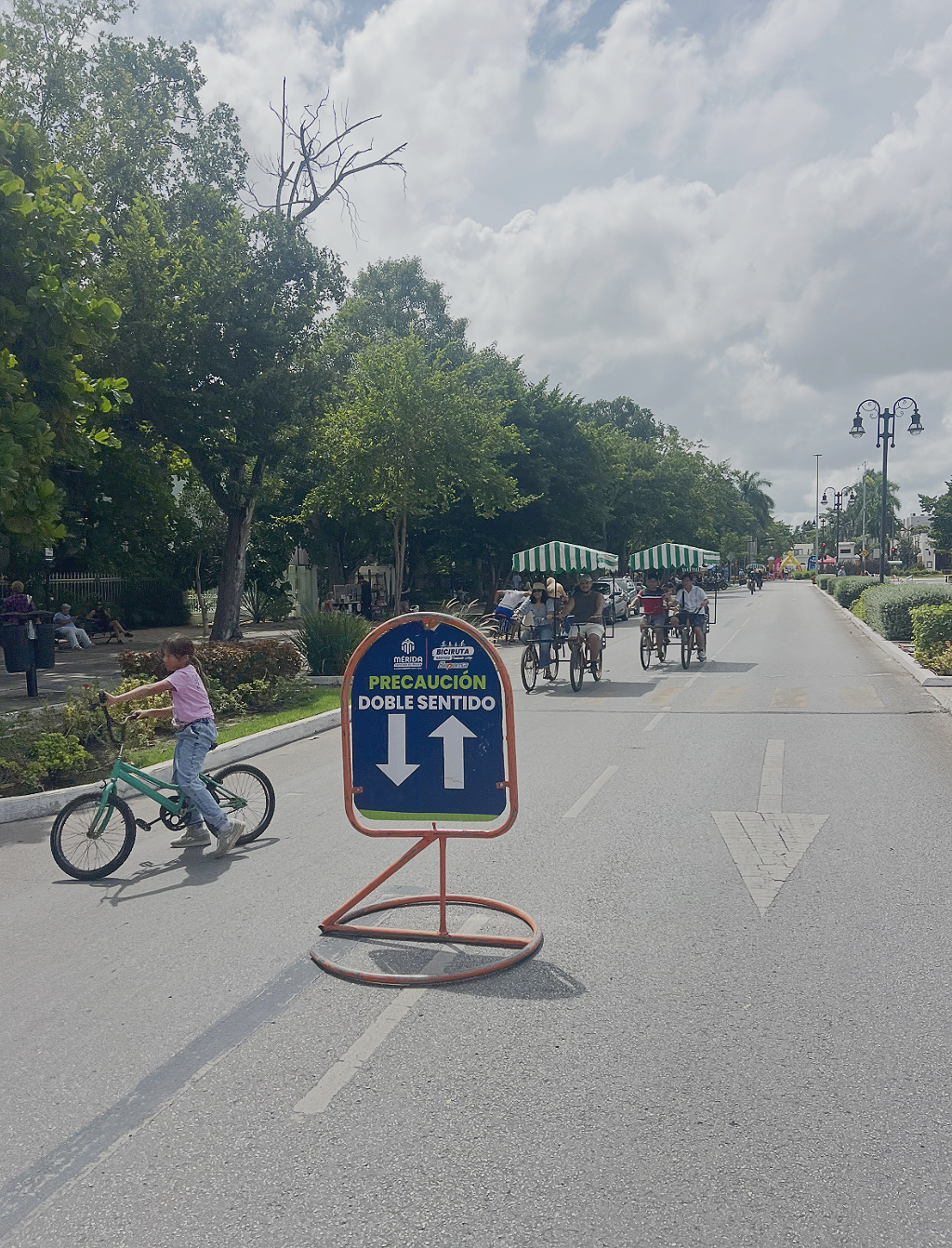
Biciruta in Mérida, Mexico
Earlier this month, I attended the International Society for Physical Activity and Health (ISPAH) Congress in Mérida, Mexico. On my first day in Mérida, I stumbled upon their Biciruta event where they close down main streets to cars every Sunday. I biked the entire route, and what stood out – besides every type of bike imaginable – were all the smiles of each family I passed. It was truly a symbolic way to kick off the week that would follow with presentations from incredible researchers around the world sharing about the different ways physical activity impacts not just physical health, but also mental health, social well-being, and brain health.
Keynote: Beyond Steps and Calories: Reimagining Physical Activity for Health, Equity, and Sustainable Futures, Dr. Deborah Salvo
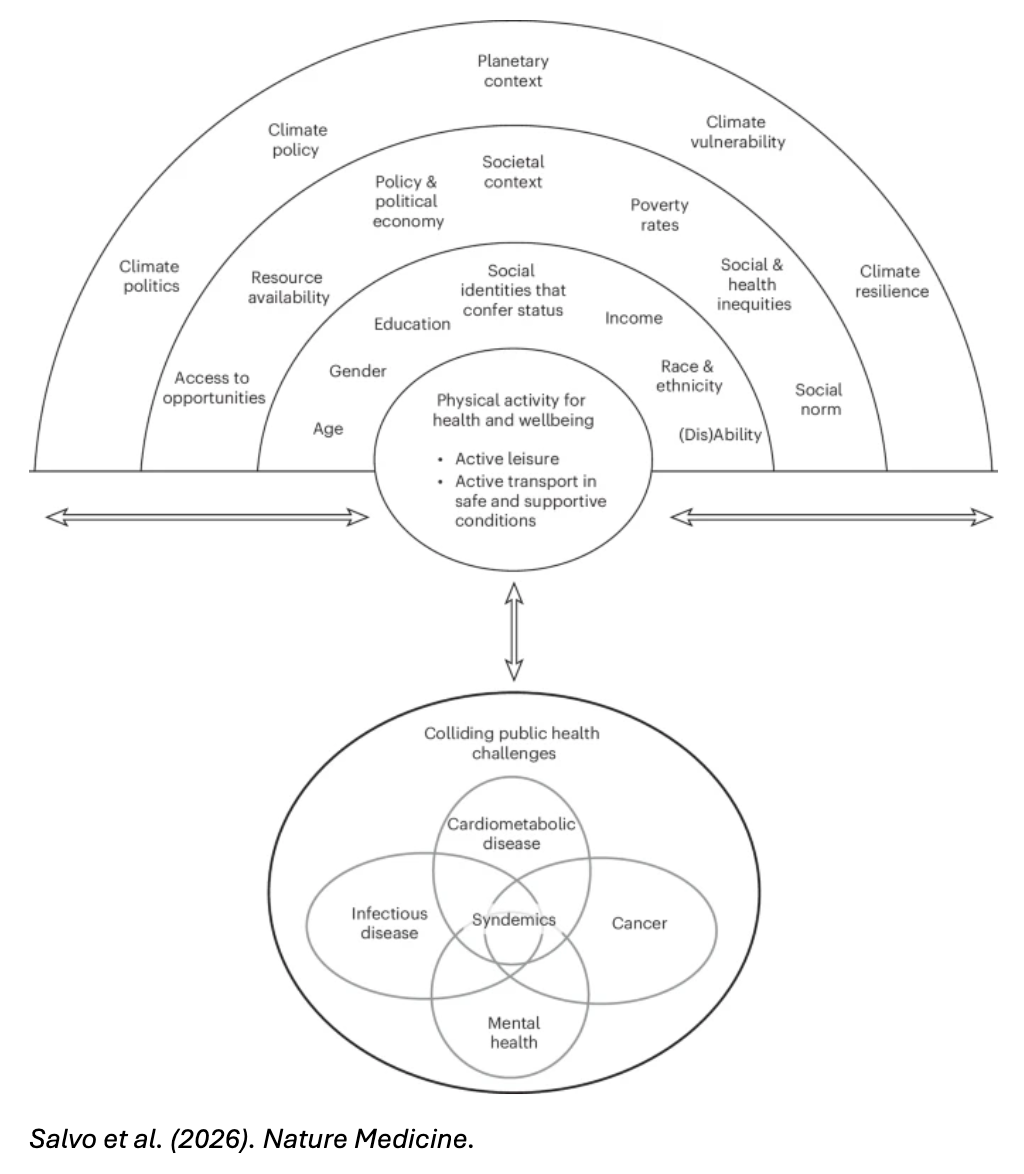
This graphic demonstrates a holistic approach to understanding the impacts of physical activity for health and well-being and includes different factors that influence whether a person is physically active
Dr. Deborah Salvo, Director of the Center for Research to Community Impact at the University of Texas at Austin, kicked off the congress with an exciting keynote. She posed the question, “What is Health?” How do we think about health and what components make us healthy?
She answered with the World Health Organization’s definition of health: A state of complete physical, mental, and social well-being and not merely the absence of disease or infirmity.
With this definition in mind, she proposed a shift in the field toward a model of “physical activity for complete health and well-being, centering health equity, and emphasizing the totality of benefits of physical activity for human, social, and planetary health.”
From the Outride perspective, it was very exciting to hear the field moving toward a more holistic approach to health because we have seen firsthand through our research and programming just how powerful physical activity, like bicycling, can be in holistically supporting health throughout the lifespan.
Who Benefits Most?
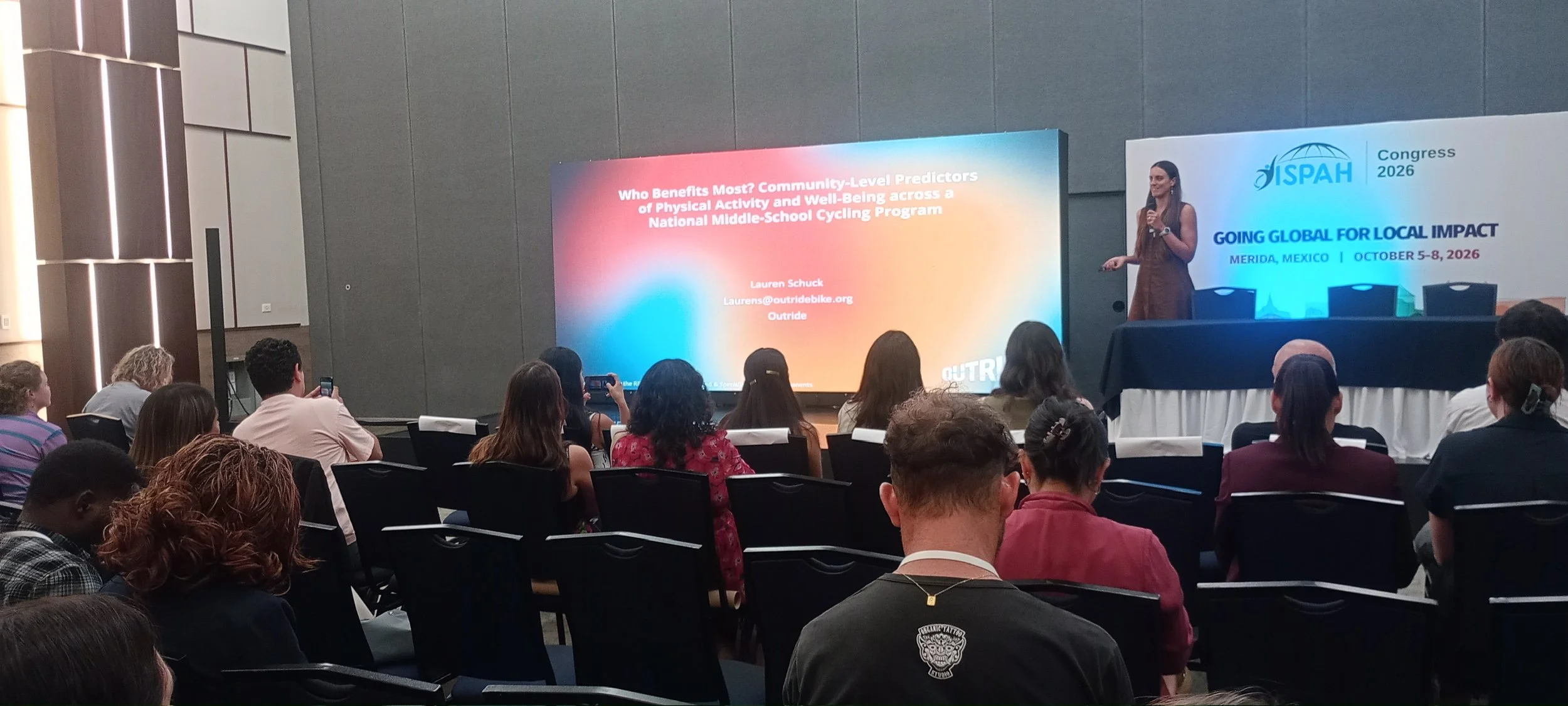
Community-Level Predictors of Physical Activity and Well-Being across a National Middle-School Cycling Program, Lauren Schuck
This framing tied nicely into my presentation which explored Outride’s Riding for Focus dataset at baseline (before students are exposed to the program). We analyzed how well-being and riding frequency were impacted by various factors such as lifestyle behaviors (sleep, screen-time, physical activity), the presence of nature in the local community, and social vulnerability.
What did we find? Even when controlling for lifestyle factors and demographics, riding frequency was a significant predictor of well-being, where more frequent bicycling was associated with higher well-being at baseline. So, even after taking things like age, income, and other lifestyle habits into account, people who rode their bikes more often tended to report higher well-being in terms of reporting feeling more cheerful, active, relaxed, rested, and interested.
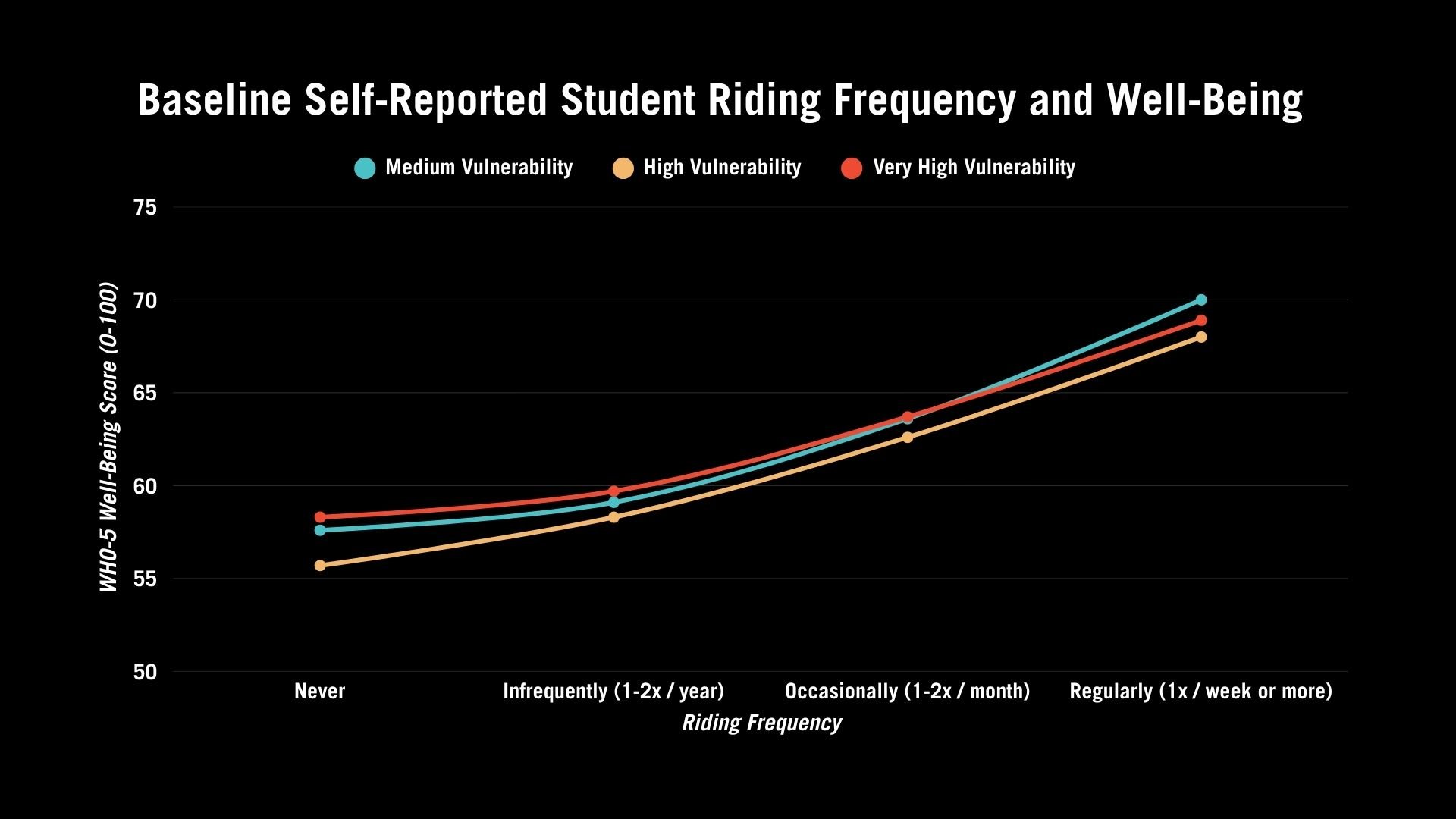
Interestingly, nature presence did not directly predict well-being, but higher nature presence was associated with higher riding frequency. This was a surprising finding because much of the research literature highlights a positive association between nature and mental well-being, so we would expect students in higher nature areas to have higher levels of well-being. One limitation of using nature presence is that we do not know which students are actually accessing nature or how much time they are spending outside. Future work could explore the distinction between the presence of nature and actually accessing nature, and how this differentiation may impact well-being.
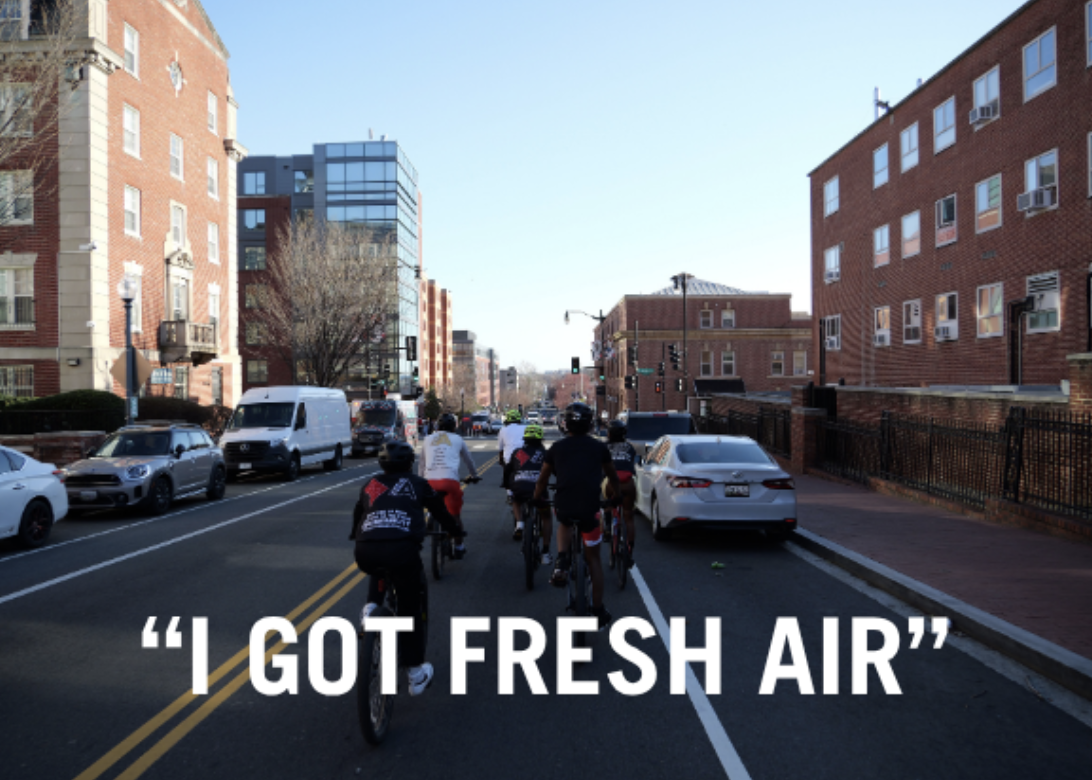
Dunbar High School, Washington D.C.
We also did an exploration of how student self-reported well-being changed from before participating in Riding for Focus to after participating in the program. These analyses hinted that students at the schools with the lowest nature presence (think urban areas like New York City or Washington D.C.) had the largest improvements in well-being after participating in Riding for Focus. When we looked at the qualitative responses about what these students liked most about the program, a common theme, summed up by this response, stood out: “I GOT FRESH AIR” (yes, it was in all caps). So, one possibility to explore is that just getting outside and into fresh air on bicycles during the Riding for Focus period may be having strong impacts on student well-being. We will be diving deeper into this question in the upcoming year, so stay tuned!
Other Congress Highlights
A few other presentations stood out to me in relation to Outride’s work (though I wish I could highlight every session I saw – reach out to me at laurens@outridebike.org if you are curious to learn more!).
Dr. Tim Walker, from the University of Texas at Houston School of Public Health, shared findings from the NFL Play 60 program’s national survey in his presentation, Comparing implementation of Whole-of-school components by school level in the United States. He highlighted the percent of schools in their dataset that meet recommendations for PE – only 11% of elementary schools, 52% middle schools, and 77% of high schools – and these are schools that may be biased to include more physical activity programming than the national average. Check out the NFL Play 60 school grant at this link.
From our Riding for Focus data, we see how important PE can be to reach students equitably during the school day. I loved how Lesly Samara Vejar Renteria, a Technical Officer from the Pan American Health Organization, framed it in her talk, Physical Activity in Schools: Progress and Opportunities. In her presentation she shared that “schools are a unique platform to improve the health, wellbeing, equity and promote physical activity among children. Physical activity in schools:
Promotes equity: schools reach almost every child, every day
Opportunity to reach out to families and communities
Development of knowledge, attitudes, life skills and habits at a critical age
Obesity and overweight prevention, and other non-communicable diseases, improves cardiovascular and metabolic health
Positive impact on mental health, reduction in symptoms of anxiety and depression
Educational benefits, improvements in attention, memory, classroom behavior, and academic performance.”
Despite the importance of PE, many of our Riding for Focus teachers report that PE is often one of the first classes to receive funding cuts. Research like this can demonstrate how important it can be for students to be active during the school day – again, not just for physical health, but to help them return to the class more focused and more regulated, to provide time to be social with friends and off of phones, and to support improved mood. This is why supporting school-based programs that expand opportunities for physical activity can be crucial for overall student health and well-being.
Final Thoughts:
I loved the slogan for the city of Mérida that I found during the Biciruta – “contigo es mejor,” or in English something like, “With you, it’s better.” Increasing access to the benefits of physical activity takes effort from all angles – researchers, educators, practitioners, policy makers, parents, the general public, the list goes on. So, if you have made it this far… – this work is better – and becomes possible – with you. Whether you are a professional in the space, a parent about to teach your kid how to ride a bike, or just curious to learn more and raise awareness about bicycling’s impacts on brain health and well-being, we want to get you involved!
Listed below are some opportunities for you to bring these benefits to your community through programming and amplification.
The Riding for Focus grant is currently open until January 29th, 2027. If there is a middle school in your community that is eligible, encourage them to apply here.
Our Research Partnership Grants are getting kicked off and will be exploring various ways of how cycling contributes to brain health and well-being throughout the lifespan as well as how to increase access to cycling to groups who are typically underrepresented – learn more about the projects and stay tuned for updates by signing up for the Outride Research Pool.
See Outride’s Research Resources page to learn more and raise awareness about bicycling’s benefits for brain health and well-being.
Donate to Outride to support a research project or Riding for Focus school.
What I’m Reading after ISPAH:
Domain-specific physical activity levels and risk of dementia: a systematic review and meta-analysis: LINK
Using the Behavioral Epidemiological Framework to Help Bridge the Divide Between “Physical Activity and Health” and “Sport for All”.: LINK
Pan American Health Organization. Regional guidelines on healthy eating and physical activity policies in school settings.: LINK
Physical activity for public health in the 21st century.: LINK