
How Biking Rewires & Rejuvenates Your Brain
Part I: Cycling for brain health and Well-Being Series
Written by Lauren Schuck, Edited by Dr. Esther Walker

This week I went for a morning ride to start my day off right. Having researched the benefits of bicycling for a little over two years now, I try to practice what I preach! As I arrived at the point in the ride when the chatter fades and the bigger thoughts start to come through, I wondered – when was the last time I naturally thought about what my brain is doing while I’m biking?
I often talk about the mental health benefits of riding, like feeling happier or more productive after a ride, but rarely do I imagine my brain waves changing in real-time, or how new neurons are growing and getting stronger when I go for a ride (unless we’re doing our Brains on Bikes demo, of course!).
To make up for this lack of attention I/we give our brains, we are starting a series on the neuroscience behind cycling. This first blog will provide a high-level overview of what’s going on when we go for a spin. Future posts will dive deeper into different facets of neuroscience and how cycling supports brain health. Through this series, we hope to:
Connect how going for a bike ride causes changes in the brain which can then lead to the changes we notice in our behavior and mood states.
Foster appreciation for all that your brain does for you every day, bike ride or not.
Invite curiosity (and some nerdiness) into your bike rides by imagining how your brain waves might be changing – report back to me (laurens@outridebike.org) if you follow this one!
If there’s a certain topic you would like to see covered, email us at research@outridebike.org
Summary
With our brains being invisible behind our skin and skull, it’s often easy to forget about them completely! But between your ears, there is a LOT going on. First off, our brains are only about 3 lbs.: that’s only 2% of our total body weight. Yet our brains consume about 20% of our body’s total energy (1). For the cyclists reading this, you can think of 1/5th of your electrolyte-filled water bottle going up to your brain (not just your legs!). This tells us that our brains are always working hard for us, even when we are sleeping. And when we go for a bike ride, amazing things happen in the brain that support our brain health and well-being. The following sections will provide an overview of some of those changes, and we are excited to dive further into these topics in future blogs.
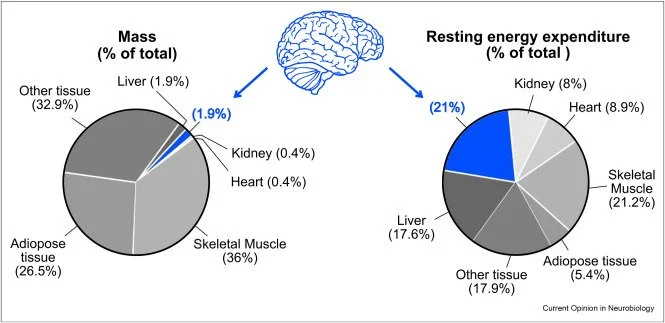
Figure 1 from Padamsey & Rochefort, 2023, Current Opinion in Neurobiology, licensed under CC BY 4.0
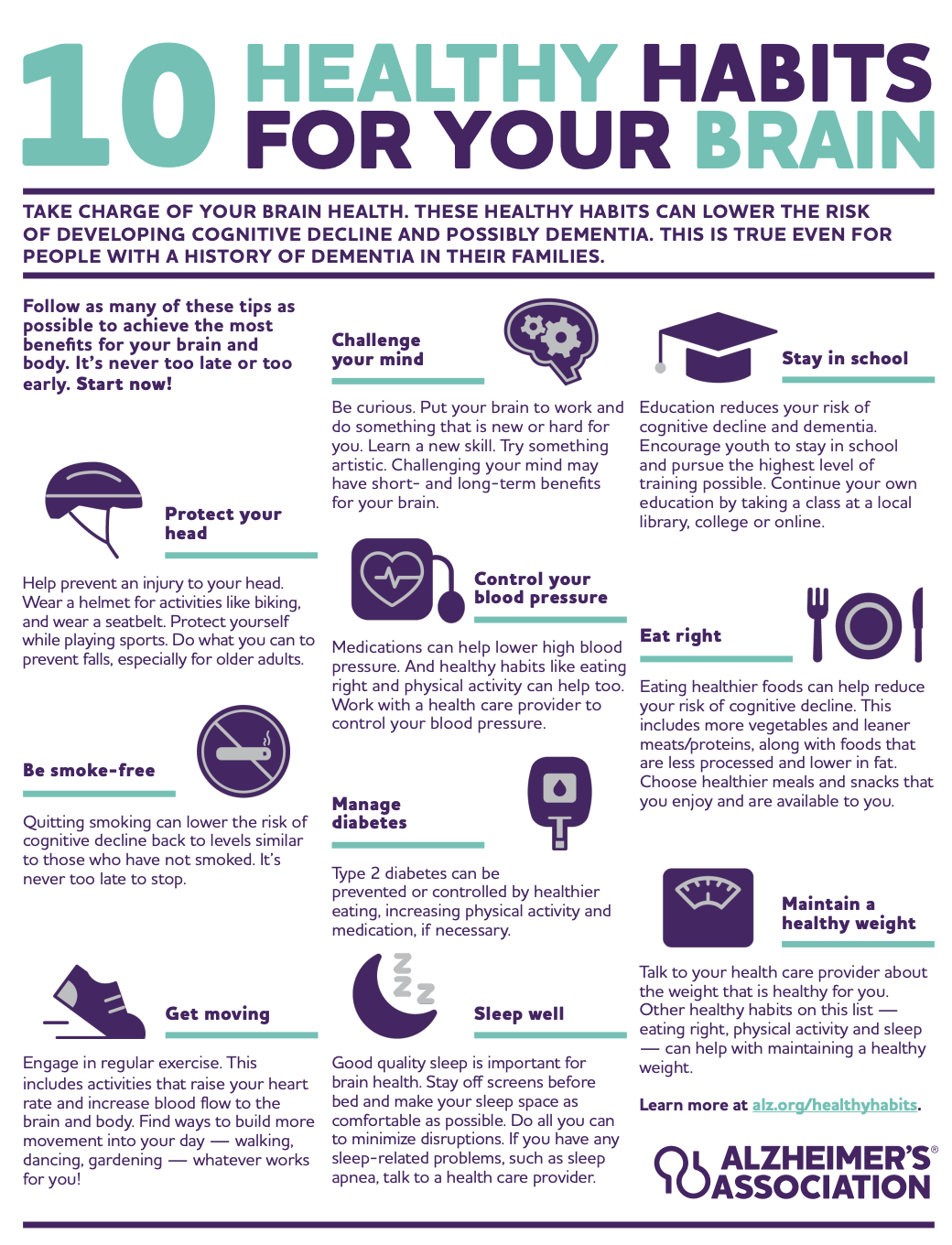
This infographic from the Alzheimer’s Association details 10 different things you can do to support your brain health – and it’s never too late to start doing any of these things! Biking is a great activity that targets some of these healthy behaviors. You get moving, helmets can provide protection, and it can challenge your mind by exploring new places and activating your senses.
What is “brain health?
Brain health is an umbrella term that reflects how well the brain is functioning across many domains including cognitive (how we learn, think, remember), emotional (mood states, emotion regulation), and motor (grip strength, walking speed) abilities (2). It includes both:
Brain structure, which refers to the physical makeup of the brain (think neurons and the connections between them, and key areas of the brain like the prefrontal cortex and the hippocampus)
Brain function, which captures how the brain is working in real time, including patterns of activity, communication between regions, and blood flow
Brain health is often brought up in the context of aging and cognitive decline, but it’s also important to think about and address throughout the lifespan, from early brain development through adolescence and adulthood. Many everyday behaviors, including physical activity, can protect and support brain health over time.
Why Cycling for Brain Health?
All physical activity can help support brain health, and different activities can engage the brain in different ways. Cycling is especially interesting because it combines many brain-supporting elements into a single activity:
Aerobic movement: pedaling gets the heart rate up and increases blood flow
Balance and coordination: staying upright and pedaling requires constant communication between your brain and body, engaging areas involved in balance, timing, and movement control
Cognitive demand: all the small decisions you must make while riding, like when to brake, navigating a turn, or avoiding obstacles engage our attention and executive function systems
Sensory input: when riding outside, you’re exposed to a stream of sensory information, including traffic lights, wind, sounds of traffic, visual flow
Context: riding outside or with others can add extra brain benefits, such as reduced stress due to nature exposure or boosted motivation and mood when riding socially
*Research shows the benefits span both stationary and e-bikes as well.
Given these unique aspects of cycling, it can be a powerful tool to improve brain health across the lifespan. The following sections provide an overview of research findings demonstrating how cycling impacts both the structural and functional components of brain health.
Structural Changes: How the Brain is Built
Our brains are always changing throughout our lives. You may have learned that your frontal lobes wrap up development around age 25, but our brains do in fact continue to change and adapt as we age, a process called neuroplasticity. These changes happen gradually over weeks, months, and years. Regular biking is one way to positively impact structural brain health. Research has shown that cycling and other forms of aerobic movement influence the brain in many important ways, including:
Brain Derived Neurotropic Factor (BDNF): BDNF is a protein that is often described as the brain’s fertilizer. It supports the growth of new neurons, maintains healthy ones, and strengthens the connections between them. Regular aerobic exercise, including cycling, can boost BDNF (3) levels, which is associated with improvements in learning, memory, and mood, as well as increased neuroplasticity (4). This means that consistent rides can help the brain become more resilient, adaptable, and responsive to new challenges.
The hippocampus: The hippocampus is known as the brain’s memory center. It’s involved in memory, learning, and spatial navigation: all important skills cyclists rely on when navigating routes, remembering landmarks, and responding to changing environments. A growing body of research has found that people who regularly engage in physical activity, including cycling, tend to have larger hippocampal volume (5). Larger hippocampal volume is associated with better cognitive function and may help protect against age-related cognitive decline.
Functional Changes: How the Brain Interacts & Adapts
Functional changes refer to different activities in the brain which can provide information on our behavior and mood states in the moment. These short-term changes can help us understand why riding often leads to that familiar feeling of mental clarity, focus, or calm.
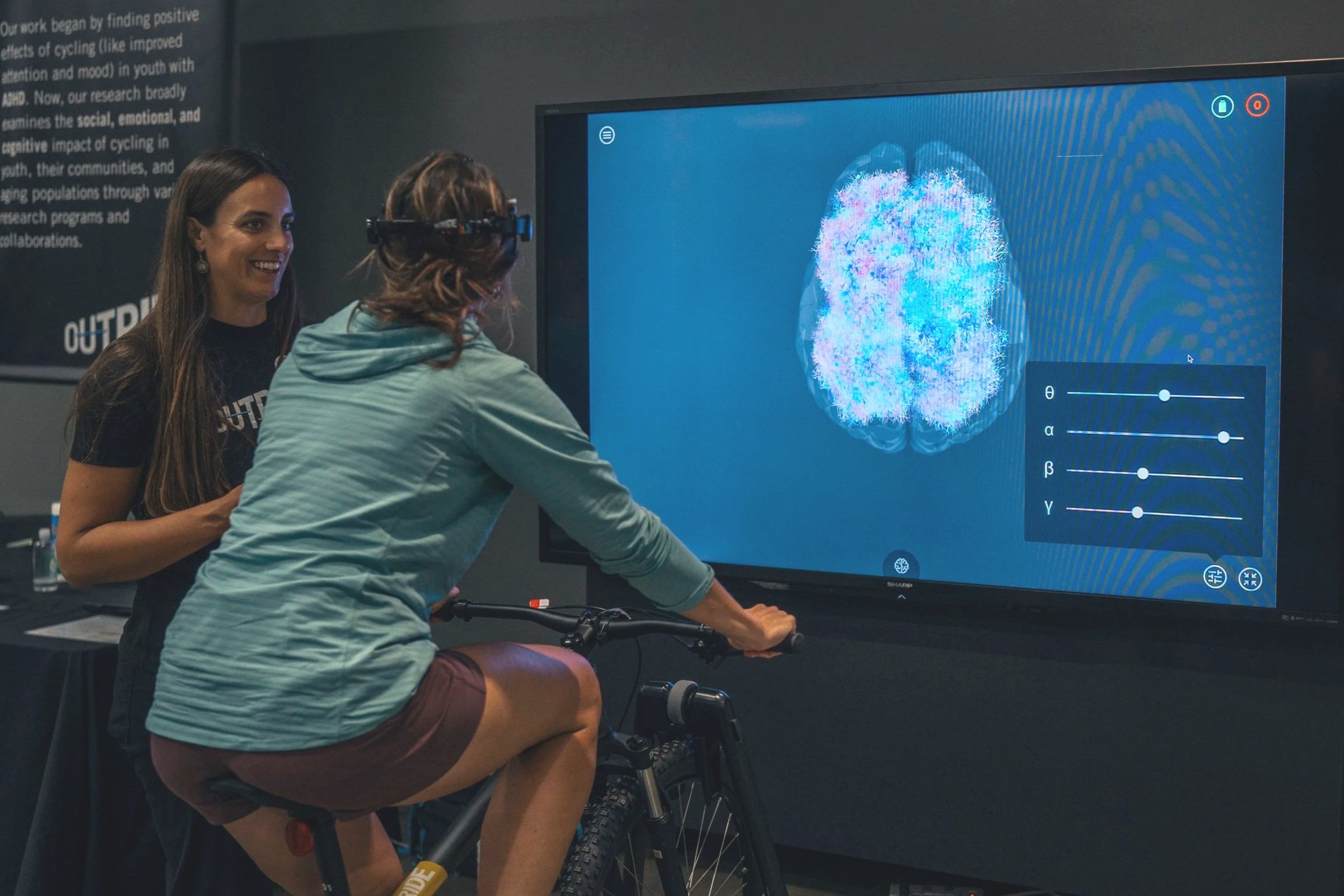
Outride Brains on Bikes EEG Demo
Scientists often use brain measurement tools, like electroencephalography (EEG), which can provide insights into what is happening in the brain. For example, EEG measures patterns of electrical activity in the brain, often called brain waves. These brain waves can provide real-time information about how alert, engaged, or rested the brain is. By comparing brain waves before and after a ride, researchers can examine how riding influences these patterns and how this corresponds to changes in mood states and how active/awake you feel.
Brain function is also studied by examining how efficiently we detect and respond to information in our environment. After a bike ride, people often show faster reaction times and improved processing speed on various cognitive tasks. These shifts can also be seen in EEG signals, like the P300 response, which is often linked to attention and information processing. When this signal becomes stronger after riding, it suggests that the brain is better prepared to detect and respond to information around you.
Altogether, research shows that even after a single bike ride:
Brain waves become more optimal for focus and attention, though this depends on the intensity and duration of the bike ride (6)
Our reaction time and processing speed can get faster after a bike ride (7)
Have you noticed that you feel more awake and attentive after a ride?
Neurotransmitters, like dopamine, epinephrine, and norepinephrine flood the brain, leading to positive changes in mood (8).
Emerging Research
Newer studies are beginning to explore how physical activity like cycling (along with good sleep habits!) can support the brain’s glymphatic system, a network involved in clearing waste from the brain. Findings indicate that engaging in cycling consistently over time supports waste removal in the brain, which can reduce inflammation and protect cognition (9).
Together, this growing body of research helps explain why cycling so often changes how we think and how we feel, even after a single ride. Through partnerships with universities and research institutions, Outride helps deepen our understanding of how cycling strengthens brain health across the lifespan. We also turn this research into practice by supporting Riding for Focus school programs and community cycling organizations to increase access to cycling and its benefits. We are excited to continue investing in and sharing out this work to connect what’s discovered in the lab with what riders experience in everyday life. And don’t forget to think about your brain the next time you go for a ride!
Follow us on Instagram or subscribe to our newsletter for updates on upcoming blogs about bicycling’s impact on structural brain changes, functional brain changes, and flow state.
We also invite you to join the Research Pool! This is a group of educators, researchers, cycling orgs, and people interested in cycling’s impact on brain health and well-being. Joining the Research Pool will keep you up to date on Outride’s research findings and new findings from the field.
Have a biking x neuroscience topic you want us to cover next? Email us at research@outridebike.org
For a deep dive on how biking changes brain waves and cognition, check out Outride’s “Focus Your Brain” Resource
References:
Padamsey, Z., & Rochefort, N. L. (2023). Paying the brain’s energy bill. Current Opinion in Neurobiology, 78, 102668. https://doi.org/10.1016/j.conb.2022.102668
Chen, Y., Demnitz, N., Yamamoto, S., Yaffe, K., Lawlor, B. and Leroi, I. (2022), Defining brain health: A concept analysis. Int J Geriatr Psychiatry, 37:. https://doi.org/10.1002/gps.5564
Szuhany, K. L., Bugatti, M., & Otto, M. W. (2015). A meta-analytic review of the effects of exercise on brain-derived neurotrophic factor. Journal of psychiatric research, 60, 56–64. https://doi.org/10.1016/j.jpsychires.2014.10.003
Bathina, S., & Das, U. N. (2015). Brain-derived neurotrophic factor and its clinical implications. Archives of medical science : AMS, 11(6), 1164–1178. https://doi.org/10.5114/aoms.2015.56342
Hou C, Zhang Y, Zhao F, et al. Active Travel Mode and Incident Dementia and Brain Structure. JAMA Netw Open. 2025;8(6):e2514316. https://doi:10.1001/jamanetworkopen.2025.14316
Hosang, L., Mouchlianitis, E., Guérin, S. M. R., & Karageorghis, C. I. (2024). Effects of exercise on electroencephalography-recorded neural oscillations: a systematic review. International Review of Sport and Exercise Psychology, 17(2), 926–979. https://doi.org/10.1080/1750984X.2022.2103841
Renoud-Grappin, R., Pazart, L., Giustiniani, J., & Gabriel, D. (2024). State of the art and future directions for measuring event-related potentials during cycling exercise: a systematic review. PeerJ, 12, e17448. https://doi.org/10.7717/peerj.17448
Basso, J. C., & Suzuki, W. A. (2017). The Effects of Acute Exercise on Mood, Cognition, Neurophysiology, and Neurochemical Pathways: A Review. Brain plasticity (Amsterdam, Netherlands), 2(2), 127–152. https://doi.org/10.3233/BPL-160040
Yoo, RE., Kim, JH., Moon, H.Y. et al. Long-term physical exercise facilitates putative glymphatic and meningeal lymphatic vessel flow in humans. Nat Commun 16, 3360 (2025). https://doi.org/10.1038/s41467-025-58726-1