
What 87 studies reveal about the benefits of biking on brain health and well-being
Written by Lauren Schuck
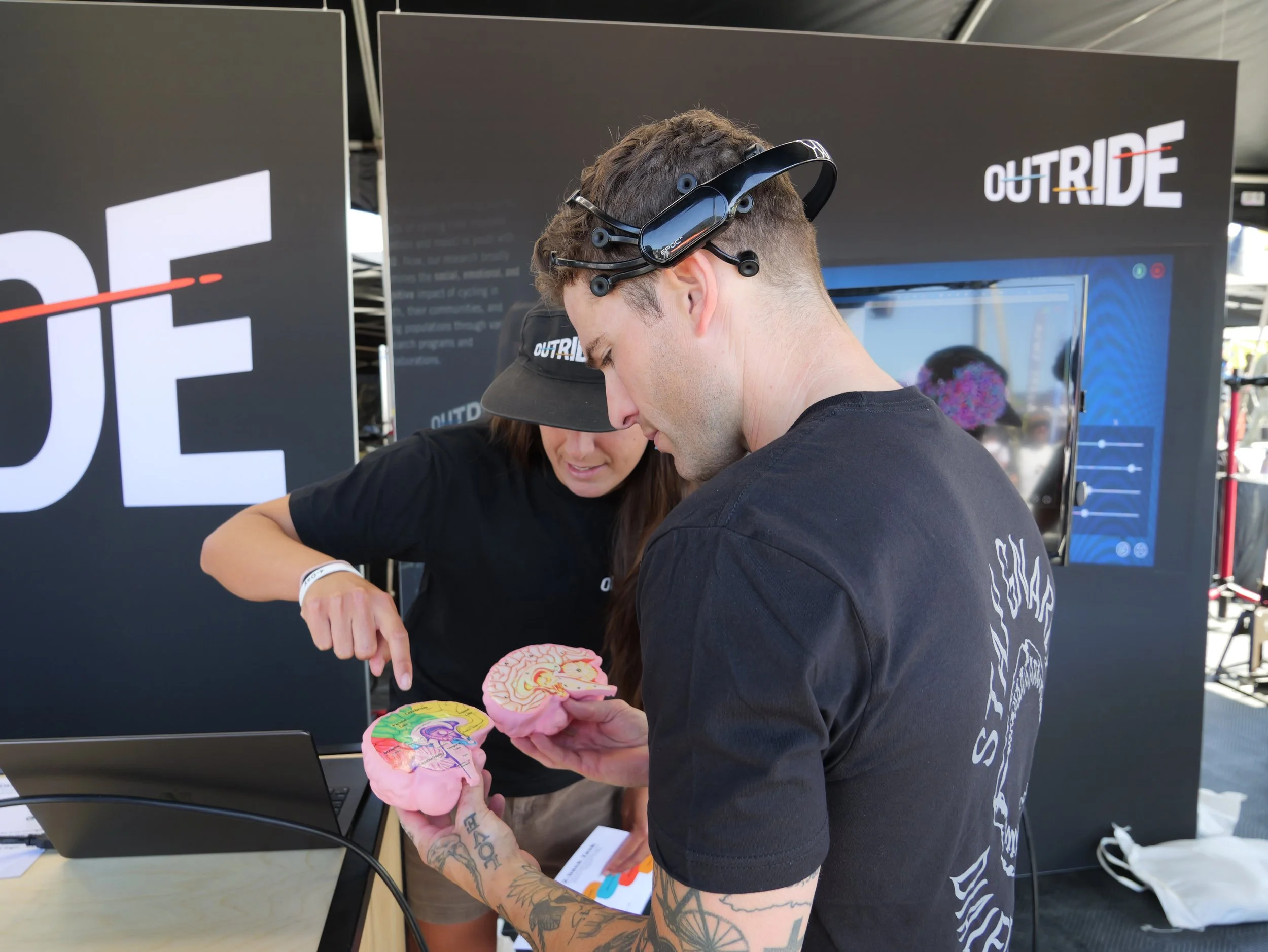
What if you had all the information about the ways cycling programs impact brain health and well-being at your fingertips? Well, now you do! Outride is excited to share our latest peer-reviewed publication, A Scoping Review of Bicycling Interventions’ Impact on Psychological, Social, Emotional, and Cognitive Well-Being. This work is the result of a collaboration with researchers at the University of Oklahoma (Brandie Reisman, Dr. Cian Brown, now at the University of Arkansas) and Loma Linda University (Dr. Seth Wiafe and Dr. Sean Wilson). It was made possible as part of a broader research grant supported by the REI Cooperative Action Fund (stay tuned for the results of more research there!). The paper summarizes results from nearly 90 research studies that assessed how going for a bike ride impacts everything from mental health to brain waves to social network size.
What is a Scoping Review?
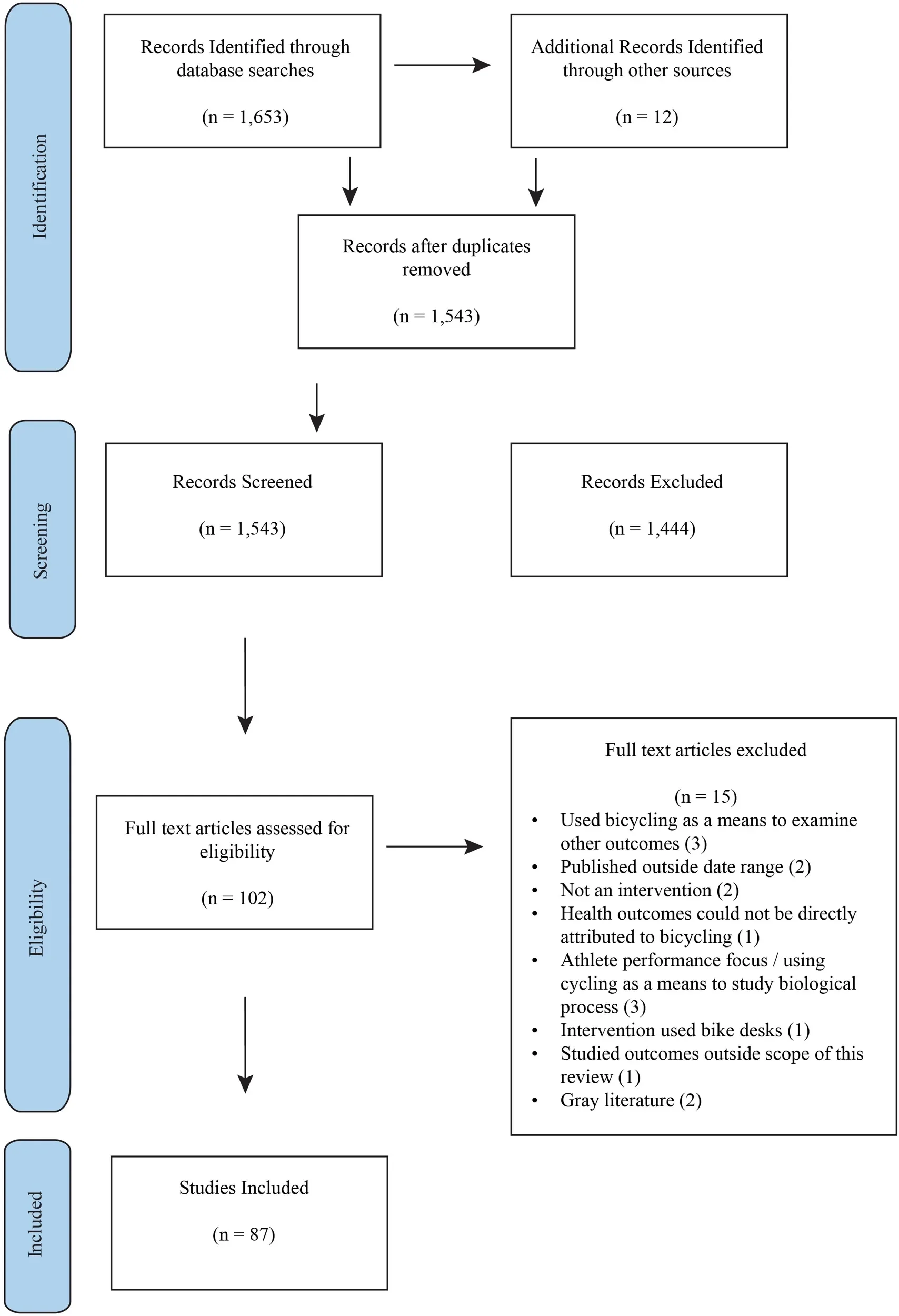
Image courtesy of Schuck, Reisman, Walker, Wiafe, Wilson and Brown (2026). This is an open-access article distributed under the terms of the Creative Commons Attribution License (CC BY).
If you’ve ever wondered, “what does the research actually say about biking and brain health and wellbeing?”, you’re not alone! The challenge is that there isn’t just one single study on a given topic. There can be hundreds or more studies, all done in different ways, with different people, all (often) measuring slightly different outcomes. That’s where a scoping review comes in. A scoping review is a type of study that brings all that research together in one place. Instead of running a single experiment, researchers systematically gather and synthesize all available research on a topic to understand what we know, as well as what we don’t know. You can think of it as creating a “map” of the research. For this review, that meant:
Screening over 1,600 research articles
Identifying which ones studied biking as a structured program and included a measure of wellbeing
Comparing notes with other researchers to ensure we all agreed, narrowing it down to 87 studies that met the criteria
Once we identified those studies, it was time to dig into what measures each study used, the populations they studied, how long they rode, what types of bikes they used and where they rode during the intervention (i.e. indoor vs. outdoor), and what results they found. This process helps us see the bigger picture, helping to identify consistent trends, compare results across different populations and settings, and highlight gaps in research, so we know where more work needs to be done. Esther likes to say I am now an encyclopedia for all things cycling and well-being – so please ask me any questions you may have about the included studies, I’d love to share more about what I have learned through this process!
What We Found
Now the exciting part – what did we learn!
Across the 87 studies, there was a wealth of information on how bicycling impacts well-being and brain health. To make sense of it all, we split results into four sections based on the well-being domain that was assessed: psychological, social, affective, or cognitive.
While each study looked at slightly different populations and programs in different settings, a few clear patterns emerged, including the importance of consistency, setting, and intensity in shaping outcomes. I have summarized a few key findings from each domain below:
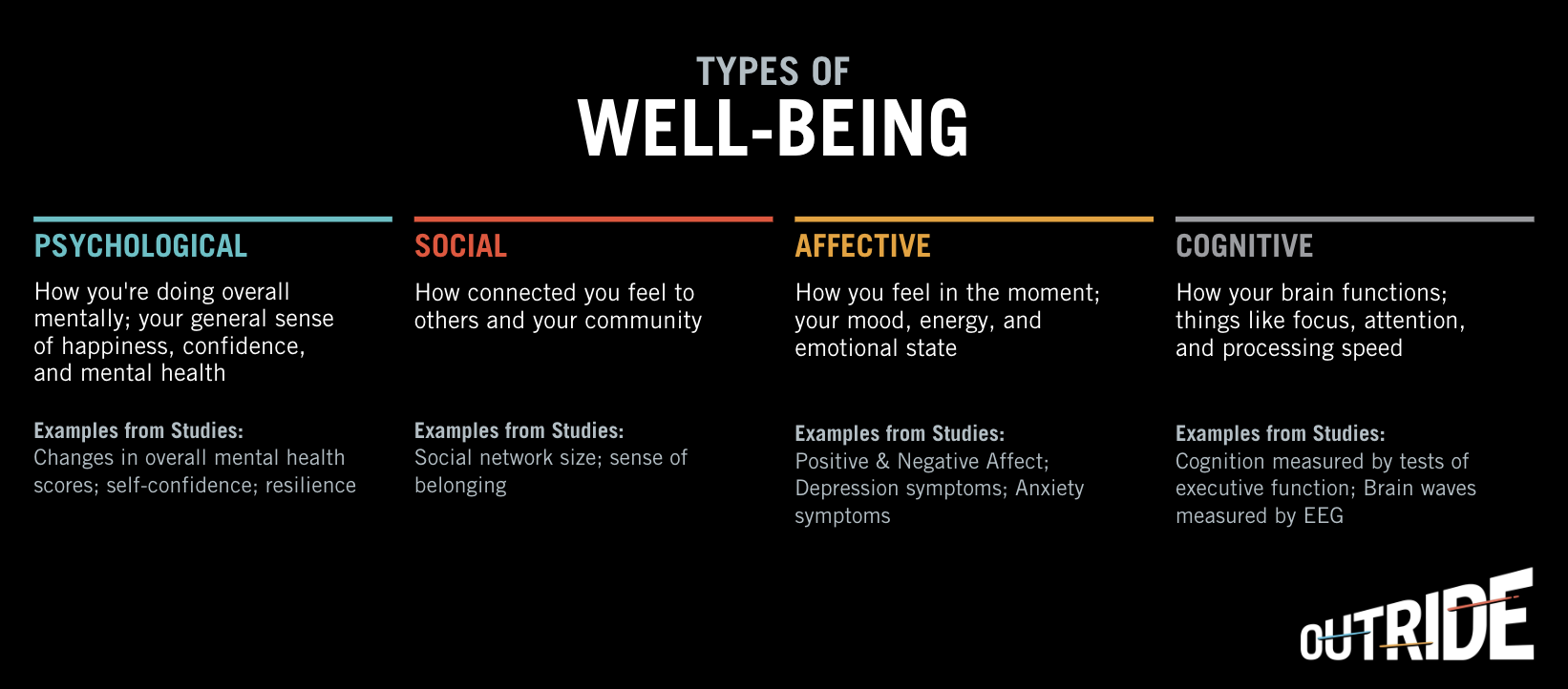
Examples of different domains of well-being and how they are measured
Psychological Well-Being / General Mental Health
If you are someone who feels much happier after a bike ride or if you feel like you are at your best after a bike ride, this section is for you.
When we assessed the studies all together, a clear pattern emerged. Interventions that took place over multiple weeks saw the most consistent improvements in general mental health. So, the more consistently people rode, the better their overall mental health – and this is replicated in the broader physical activity literature as well (Mahindru et al. 2023).
One example of this comes from a study by Neumeier et al. (2019), where they implemented a year-long intervention comparing outcomes among people who were split into 3 types of commuting groups: either commuting to work via bike, public transit combined with walking, or commuting as they usually would (the control group). Participants in the biking commuting group experienced the strongest positive effects on their overall quality of life.
Of course, any movement is good movement, so find the type of physical activity that brings you joy, and overtime, you may find it has a meaningful impact on your mental health.

Our community often speaks to the benefits of biking. One teacher shared "I love seeing students learn a life long skill. It is rewarding to see them do hard things and persevere.”
We also looked at things like self-efficacy: confidence, resilience, and belief in your own abilities. Increased self-efficacy from biking is a theme we hear again and again from our community partners and educators, who see firsthand how biking can strengthen confidence and resilience in their participants. For me, I think of when I first started biking to and from classes in college to now having done my first double century ride, and all the confidence that has been built along the way, and how that has translated to how I carry myself off the bike.
Interestingly, in the review, only a small number of studies measured this outcome directly, with mixed results. This is a very exciting avenue for future research, especially since so many people experience biking as a powerful way to build confidence and self-efficacy, whether you’re taking your first pedal strokes or building confidence on a technical mountain bike trail.
Social Well-Being
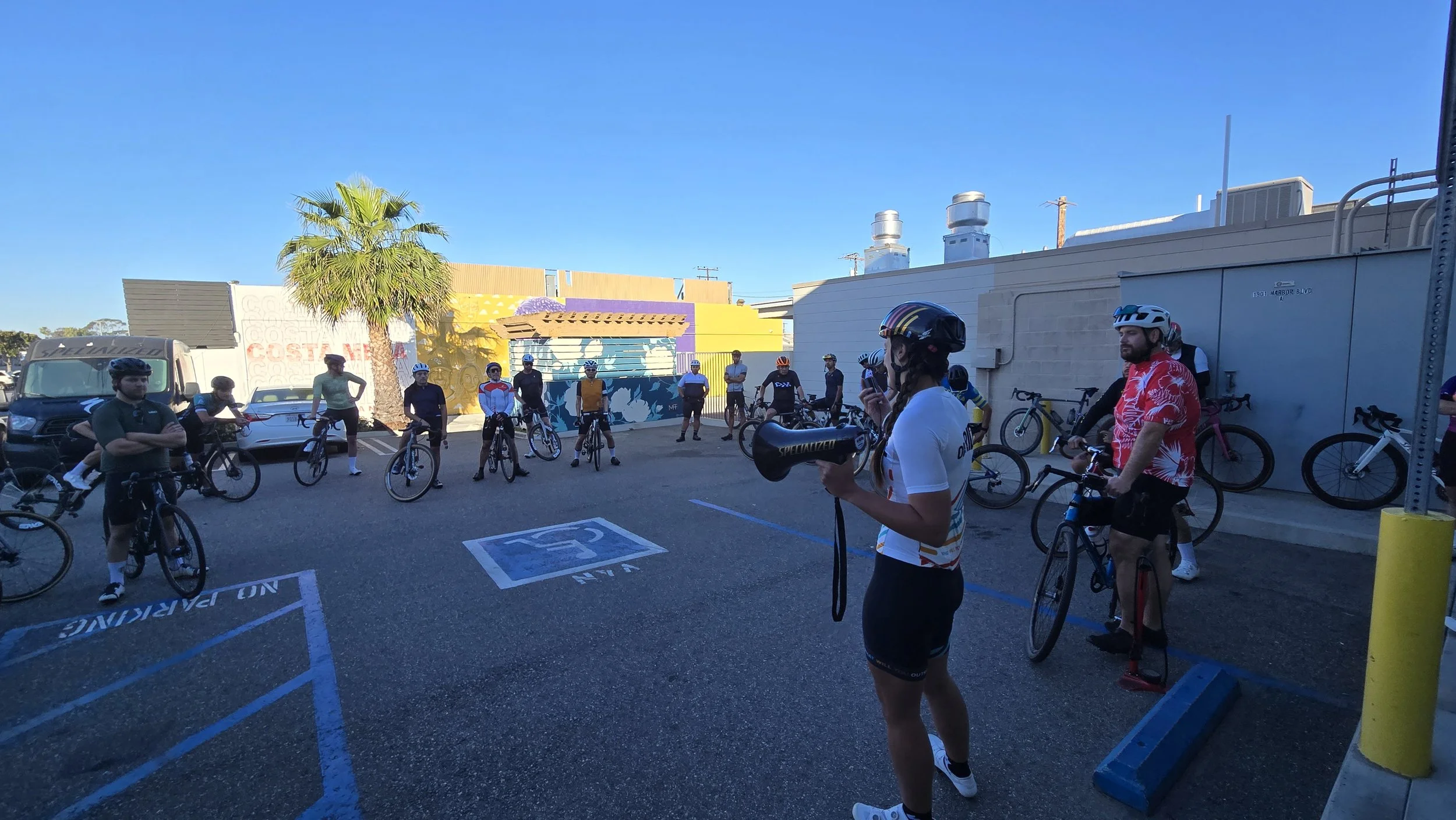
Lauren at the Specialized Costa Mesa Donut Ride
If you have ever joined a social cycling group (my favorite is the Donut Ride out of Specialized Costa Mesa in California), or ridden bikes with friends or family, you have probably felt the social benefits of riding bikes. Across studies that measured social outcomes, the findings were consistently positive. Biking interventions were linked to:
Larger social network size
Greater sense of belonging
Increases in prosocial behaviors (your desire to help others/altruism).
Many of these benefits were tied to shared experiences, whether group rides, school classes, or community programs. For example, a study by Brookman et al. (2024) found that a 26-day stationary cycling challenge with older adults in residential aged care positively impacted social well-being by increasing social engagement with others at the residence, staff and volunteers. In an interview, one of the participants reflected "I didn’t get into the competition, but I liked being part of the group.”
Affective Well-Being (Mood & Emotions)
We love to ask the question, “What will you Outride?” to better understand the life challenges that biking helps people navigate. We often get responses that people Outride depression, anxiety, low energy, or stress – meaning that biking can be a powerful tool that people use to improve their mood and emotions.

Our review found that biking, especially at a moderate intensity, was associated with:
Improved mood
Increased energy levels
Reduced stress
Decreases in depressive symptoms over time (long-term interventions)
Not all rides had the same effect. When workouts were too challenging and exhausting, some studies found that stress levels increased and reduced positive mood. When the workouts were more moderate, results tended to show positive benefits of biking on affective well-being. For example, one 16-week randomized controlled trial compared psychiatric outcomes between an outdoor cycling group and an occupational therapy group in patients with Schizophrenia. The outdoor cycling group significantly improved anxiety and depression symptoms compared to the occupational therapy group (Ryu et al. 2020). Based on this research, the type of biking workout you do may influence the outcomes you experience (e.g. choose a moderately challenging route on days you hope to get a mood boost).
Cognitive Well-Being
If you read Part 1 of our Cycling for Brain Health x Well-Being Series (dive in at this link), you know there is a lot going on in the brain all the time, and that biking has a strong impact on both our brain structure (how the brain is built) and brain function (how the brain interacts and adapts). In our review, a majority of studies assessed cognitive well-being, typically in a controlled indoor lab environment. Like affective well-being, outcomes varied by the type of intervention (how easy or hard the biking component was). Again, intensity played a role. Moderate cycling tended to support cognitive performance, while highly fatiguing efforts sometimes led to reduced performance. However, several studies that implemented interventions with optimal conditions found:
Improvements in focus and attention
Faster reaction times
Brain activity patterns associated with attentional engagement
If you have ever gone for a bike ride in the middle of the workday to wake up your brain - there is research supporting that change. For example, Leyland et al. (2019) found improvements in cognition among older adults across both an e-bike group and pedal cycle group after an 8-week biking intervention. Another study by Ludyga et al. (2016) compared brain waves among athletes with high and low VO2 Max. They found that athletes with higher VO2 max (suggesting greater fitness) had enhanced neural efficiency. So, our brain activity changes in profound ways both during and after bike rides.
Additional Findings
The benefits of biking spanned several modes of cycling including stationary bikes, mountain biking, road biking, and e-biking.
Benefits were the most consistent among interventions that had multiple sessions and that took place outdoors. However, this does not mean indoor riding isn’t beneficial. Many of the indoor studies included in this review were intentionally designed to push participants to fatigue, which led to a higher proportion of negative outcomes in affective and cognitive domains. For example, if you think about doing an all-out effort on the bike, you might expect that the fatigue will slow down your thinking. On the other hand, many studies that implemented a less intensive biking intervention on stationary bikes (recall the study at the aged residential care facility with older adults presented above), saw positive benefits across brain health and well-being.
Nearly 30% of the studies focused on clinical or special populations, including individuals with neurological conditions, developmental differences, mental health challenges, and chronic physical health challenges. Across these diverse groups, biking was used as an adaptable, supportive activity that could be tailored to different needs, with many studies showing improvements in areas like mood, cognitive function, and quality of life. While promising, they highlight an important opportunity to expand research in these populations to better understand how cycling can be used as an effective, real-world tool to support health and wellbeing.
Finally, important gaps still remain in the research. Future studies should prioritize engagement with youth, older adults, and underserved communities, and to continue to explore bicycling interventions in real-world settings outside of the lab.
Overall, this scoping review provides research-backed support for the multi-faceted benefits of bicycling that many of us experience when we get on the saddle, and that linger long after the ride ends. At a time when mental health challenges are rising and physical activity levels remain low, identifying low-cost, effective ways to support both well-being and movement throughout the lifespan is critical. The review positions bicycling as a promising, scalable solution that not only promotes physical activity but also enhances how people feel, think, and connect.
How to use this information:
For Educators & Cycling Organizations:
Citing research studies can be a powerful way to strengthen grant applications and gain investment from funders and advocate for your programming. This scoping review demonstrates bicycling’s power as a multidimensional tool to improve brain health and well-being and can be a source you use in the future.
In addition, this review found gaps in our knowledge around how long-term, outdoor bicycling programming impacts brain health and well-being – a question that community cycling organizations are uniquely poised to answer with their consistent programming and tangible impacts on participants. If you are interested in adding a research or evaluation component to your work, we encourage you to join the Outride Research Pool, a growing community of researchers, cycling orgs, and educators all interested in advancing the science around bicycling for brain health and well-being.
For Researchers:
If you are interested in doing community-engaged research and tackling some of the gaps presented in this scoping review, we also encourage you to join the Outride Research Pool, a growing community of researchers, cycling orgs, and educators all interested in advancing the science around bicycling for brain health and well-being. This is a great space to identify organizations with programming that would support your research goals or to share your existing research in the community.
For the General Public:
If these findings resonate or you’ve experienced the impact of cycling on your own well-being, help us spread the word! Share this blog or Instagram post with your network and amplify this research. Want to go deeper? Join us at the Outride Summit to explore the science firsthand and connect with researchers, educators, and community leaders working to bring these benefits to more people.
References
Schuck L, Reisman B, Walker E, Wiafe S, Wilson SM and Brown CL (2026). A scoping review of bicycling interventions’ impacts on psychological, social, affective, and cognitive well-being. Front. Sports Act. Living 8:1807791. doi: 10.3389/fspor.2026.1807791
Mahindru, A., Patil, P., & Agrawal, V. (2023). Role of Physical Activity on Mental Health and Well-Being: A Review. Cureus, 15(1), e33475. https://doi.org/10.7759/cureus.33475
Neumeier, L. M., Loidl, M., Reich, B., Fernandez La Puente De Battre, M. D., Kissel, C. K., Templin, C., Schmied, C., Niebauer, J., & Niederseer, D. (2020). Effects of active commuting on health‐related quality of life and sickness‐related absence. Scandinavian Journal of Medicine & Science in Sports, 30(S1), 31–40. https://doi.org/10.1111/sms.13667
Brookman, R., Hulm, Z., Hearn, L., Siette, J., Mathew, N., Deodhar, S., Cass, A., Smith, J., Kenny, B., Liu, K. P. Y., & Harris, C. B. (2024). Evaluation of an exercise program incorporating an international cycling competition: A multimodal intervention model for physical, psychological, and social wellbeing in residential aged care. BMC Geriatrics, 24(1), 435. https://doi.org/10.1186/s12877-024-05033-x
Ryu, J., Jung, J. H., Kim, J., Kim, C.-H., Lee, H.-B., Kim, D.-H., Lee, S.-K., Shin, J.-H., & Roh, D. (2020). Outdoor cycling improves clinical symptoms, cognition and objectively measured physical activity in patients with schizophrenia: A randomized controlled trial. Journal of Psychiatric Research, 120, 144–153. https://doi.org/10.1016/j.jpsychires.2019.10.015
Leyland, L.-A., Spencer, B., Beale, N., Jones, T., & Van Reekum, C. M. (2019). The effect of cycling on cognitive function and well-being in older adults. PLOS ONE, 14(2), e0211779. https://doi.org/10.1371/journal.pone.0211779
Ludyga, S., & Hottenrott, K. (2016). The Athlete’s Brain: Cross-Sectional Evidence for Neural Efficiency during Cycling Exercise. Neural Plasticity, 2016, 1–7. https://doi.org/10.1155/2016/4583674