
The impact of cycling organizations on community well-being: An overview of recent findings from Outride research partners
If you’ve ever seen a peloton of cyclists zooming through town, teenagers experimenting with their limits at a local pump track, or Riding for Focus students exploring their local neighborhoods and streets, you’ve seen first-hand how biking can influence community culture, health, and well-being. Cycling is a powerful way to boost physical health, reduce stress, build confidence, and strengthen community connections.
And though maybe you’ve admired these healthy, active spaces, the effort it takes to advocate for and create these spaces for people to ride together and enjoy the benefits of biking is probably not immediately evident. But behind every program, trail, path, and pump track are the people who are working tirelessly, often with limited resources, to ensure their communities and future generations get to experience the joy of riding.
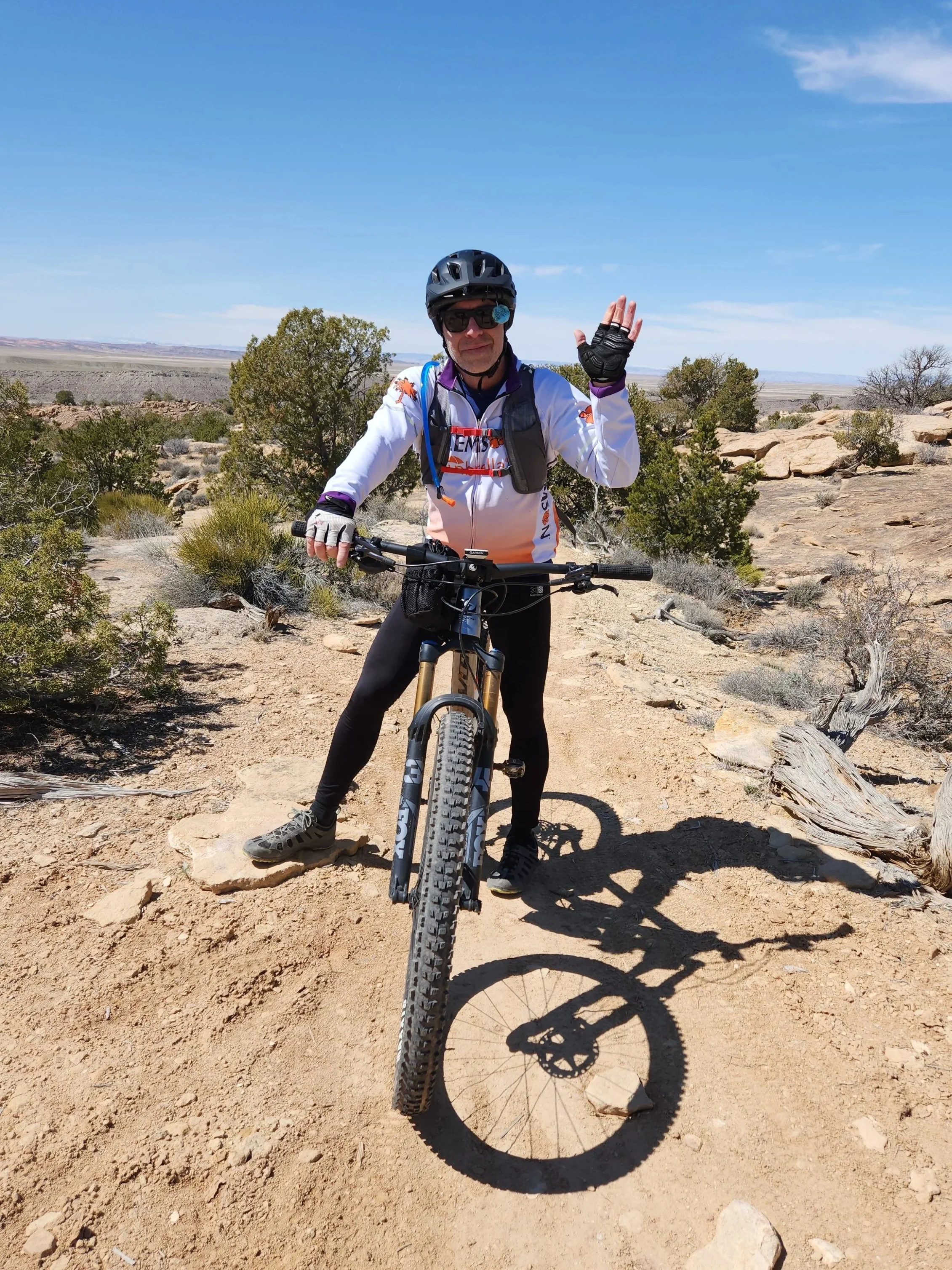
Dr. Charles Chancellor enjoying a bike ride!
Research led by Dr. Charles Chancellor, then at Clemson University, and commissioned by Outride, explored the role community cycling organizations play in cultivating the health and well-being of their communities and how Outride’s Community Impact Grants (formerly the Outride Fund) support this work. Providing access to cycling is important for community wellbeing, as cycling programs can deliver a wide-range of benefits across many domains:
Physical Health
Mental Health
Social Connection
Lifelong Activity
Community Engagement
But despite these benefits, the researchers point out that cycling does not yet have the funding and national recognition of many other sports like track and field or football. This results in several downstream effects, including:
Reduced funding and grant opportunities for bicycling organizations
Decreased access to bikes and cycling education for underrepresented groups
Fewer organized school / youth cycling leagues than other sports
These factors make cycling organizations and non-profits predominantly responsible for supporting increased access to bicycling, bicycling education, and bicycle infrastructure projects.
The researchers interviewed 66 organizations who had received Outride Fund grants between 2019 and 2022 (see table for organization characteristics).
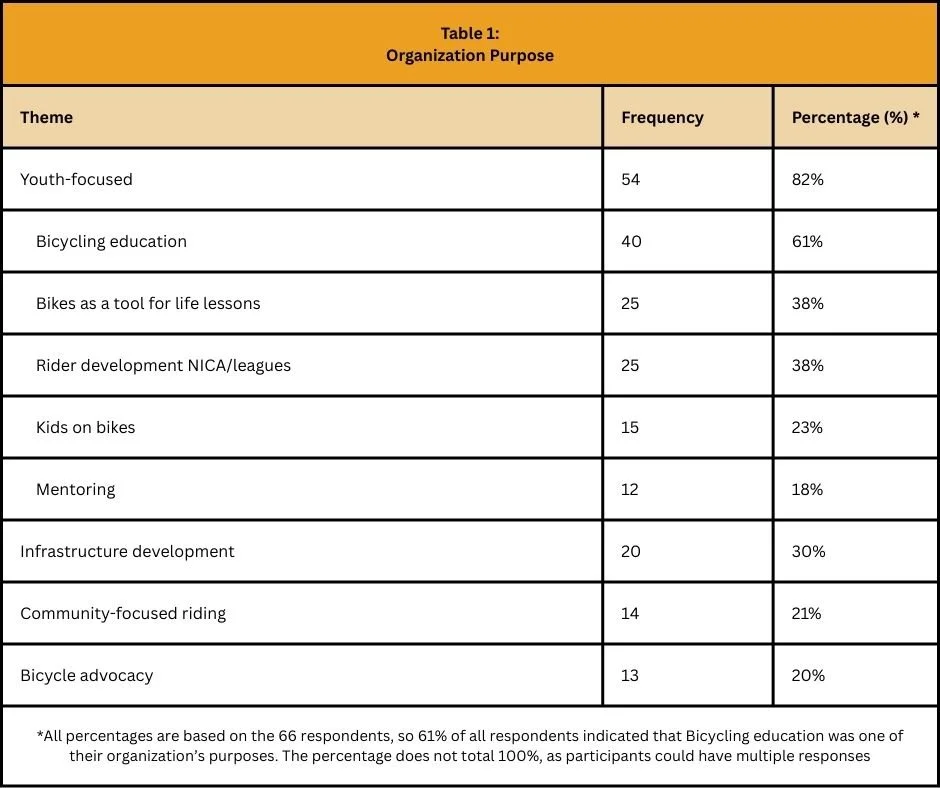
Table. Characteristics of 66 interviewed Outride Fund Organizations
In interviews conducted for this research, leaders of the organizations emphasize the unique features of bicycling that specifically advance community well-being across multiple domains.
One organization leader from Atlanta highlighted how “Riding a bike as a kid makes you feel empowered. It gives you that autonomy and freedom feeling.”
Another leader from California reflects: “It is honestly unique in that way where like football you probably won’t ever play again after high school. While cycling is something that hopefully they’ll do for the rest of their lives.”
An organization supporting female cyclists touched on how cycling promotes confidence and resilience among their participants on and off the bike: “The resilience that’s built through physical challenge and climbing hills. One of our students wrote a poem talking about how every uphill has a downhill and I didn’t realize that before cycling.”
It’s clear from the interviews that these organizations have missions that extend far beyond just bicycling programming to include overarching goals for creating spaces for positive youth development, developing a lifelong love for bicycling among participants, and empowering more people to experience the benefits of bicycling on well-being.
Yet to ensure this important work continues, the organizations included in this study reported several challenges that arise from a lack of funding for this space:
Over 60% of organizations reported their programming would not be possible without volunteers.
The Executive Director is often responsible for all levels of the organization from programming to partnership development.
Despite high demand, limited organizational bandwidth often hinders the ability to expand programming.
The Outride Fund (now Community Impact Grants) is just one funding opportunity that seeks to support bicycling programming to empower communities to experience the social, emotional, and cognitive benefits of bicycling. While helpful to these organizations, additional consistent funding sources are needed to support organizational sustainability and to prevent burnout. Too often, bicycling promotion rests on the shoulder of one individual in a community, when communities need an entire ecosystem promoting bicycling from schools to after school programming to infrastructure / safe places to ride to flourish and reach their full potential.
What now?
Funders: Help create healthier, more connected communities. Donate to Outride or support your local community cycling organization to expand access to cycling and its benefits.
Cycling organizations: Join our Research Pool to learn about ways to evaluate your programs or partner with institutions to research your impact. Demonstrating impact can support future funding and awareness. Also, keep an eye out for the opening of the Community Impact Grant application in 2026!
Community leaders: Take note of what bicycling looks like in your community. Continue investing in bicycling infrastructure and safe places to ride to empower your community to experience the benefits of bicycling.
Everyone: We hope you find time to ride your bike today– it’s good for you!
As an organization, Outride is energized and inspired by the findings of this study – you can read the article in its entirety here! These results underscore just how transformative cycling can be for community well-being, and they also highlight that meaningful progress requires concerted effort and sustained support. That’s exactly why our Community Impact Grant exists: we believe that the positive effects of biking shouldn’t be limited by lack of resources. By funding programs that build safe spaces, increase access, and empower participants, we help make the social, emotional, and cognitive benefits of cycling possible for everyone.
“Working with partners like Dr.Chancellor helps us focus on the right thing as a funder and supporter of these programs. After internalizing this study, we made key changes such as dropping a matching requirement, providing unrestricted funds, and working to connect grantees to each other to create a national network.” - Chazz Robinson, Outride Programs Leader
About Community Impact Grants
Since these interviews were conducted, the “Outride Fund” has evolved into the “Community Impact Grants”. The Community Impact Grants are no longer matching grants and have expanded to include funding for ongoing Riding for Focus support. The next application is expected to open in the spring of 2026. Join our newsletter to stay up to date with grant announcements!